The span that scored clean for three years, then didn't
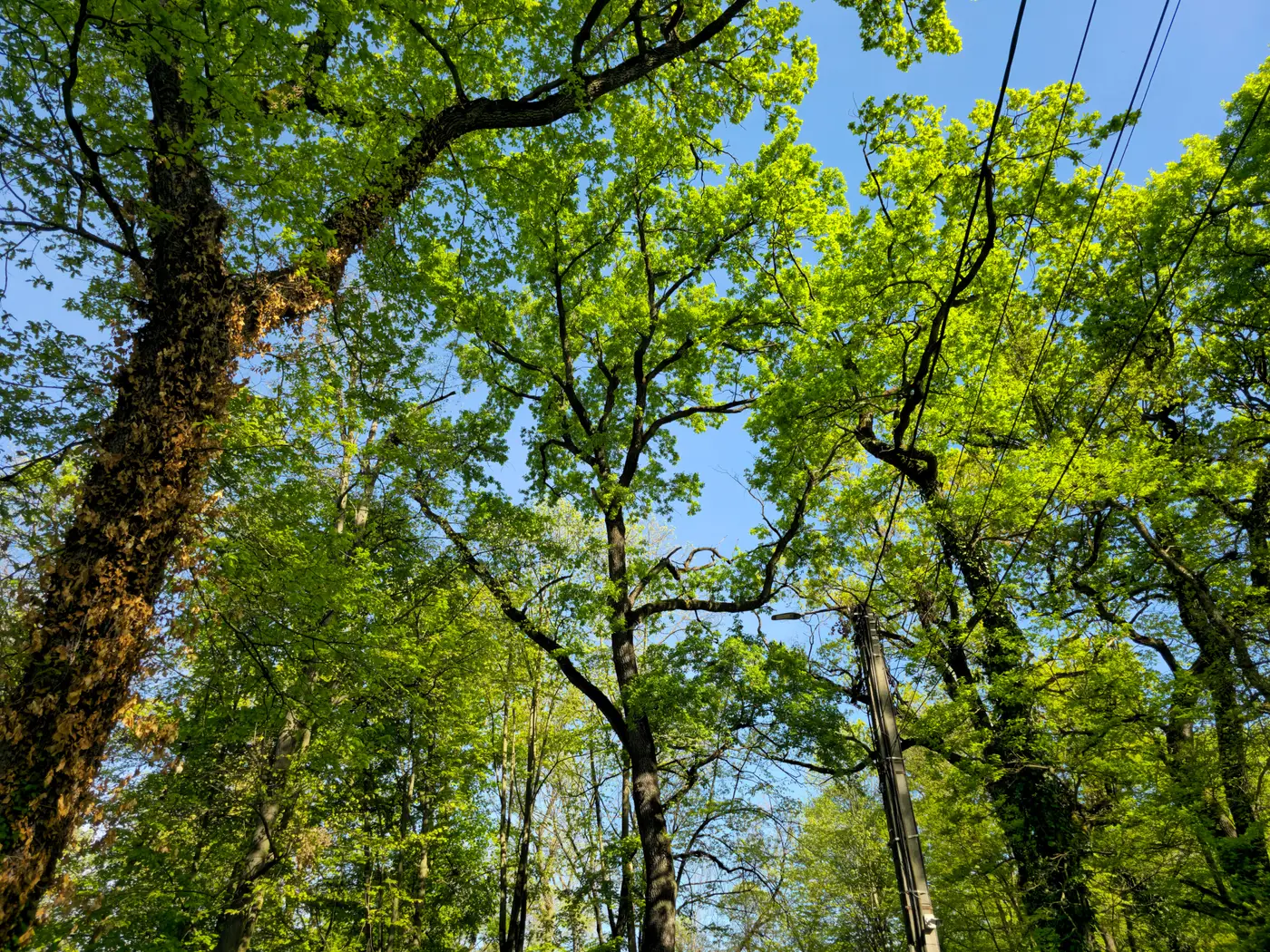
Span 214 on the east loop of a cooperative I used to pull imagery for was boring in the best way. Three flyovers running, it scored clean. Comfortable clearance under the conductor, a tidy little gap between canopy top and wire that didn't move much from one year to the next. The kind of span a vegetation manager stops thinking about, which is exactly the point of scoring every span instead of trusting memory.
Then the fourth pass came back flagged. Not borderline, flagged. A black locust stand on the north edge of the right-of-way had put on close to four meters since the prior flight, and the canopy that used to sit well clear of the wire was now reaching into the buffer the crew would normally trim to.
Nothing dramatic happened on that span between cycles. No storm, no fire, no construction crew clearing a sightline next door that let in a flush of new light. As far as anyone could tell it was just a stand that had been sitting at the edge of a growth spurt for a couple of seasons and tipped into it the year nobody was looking.
That's the part that's hard to put in a report. Canopy growth isn't a straight line you can extrapolate from three clean readings. Black locust, sweetgum, a lot of the fast colonizers that show up in disturbed right-of-way soil, grow slowly for a stretch and then put on a season of real height once they get established. A span that's been flat for three years can still be the one that moves eight feet in the fourth, and there's no clean way to see that coming from the history alone. You only catch it by scoring the span again, on schedule, and trusting the number over the pattern.
This is the argument for sticking to an annual flyover cadence even on circuits that look settled. It's tempting to stretch the interval on sections with a long clean streak and spend that budget on the spans you already know are trouble. I get the logic. But the streak is exactly what makes a span easy to miss when its growth rate finally catches up. Score drift from one year to the next is usually small and boring, a foot here, a foot there, until one pass it isn't, and the gap between flights is where that happens. A span sitting at a safe margin in March can be well into violation territory by the time a cyclical crew is scheduled to come back through in year five.
None of this means you need to fly every circuit every month. It means the between-cycle risk on a "clean" span is real and worth pricing in, especially for species known to grow in pulses rather than steadily. If a stand's growth history shows that kind of step-change pattern anywhere on your system, it's worth treating that span as due for review a little earlier than its streak suggests, rather than assuming clean-three-times-running means clean indefinitely.
A current score for every span on the circuit is what changed the outcome on Span 214, not a crew chief's memory of which spans gave trouble two seasons back. A ranked worklist built fresh off this year's canopy and clearance numbers puts a span like that back in front of someone before it becomes a fall-in, instead of after.
If you've got a circuit full of spans that have scored clean for a while, the question isn't whether to trust the streak. It's whether you're still measuring it. That's the gap a fresh ranked worklist keyed to span ID is built to close, one annual pass at a time.