Overhang vs. side growth: two different encroachment risks
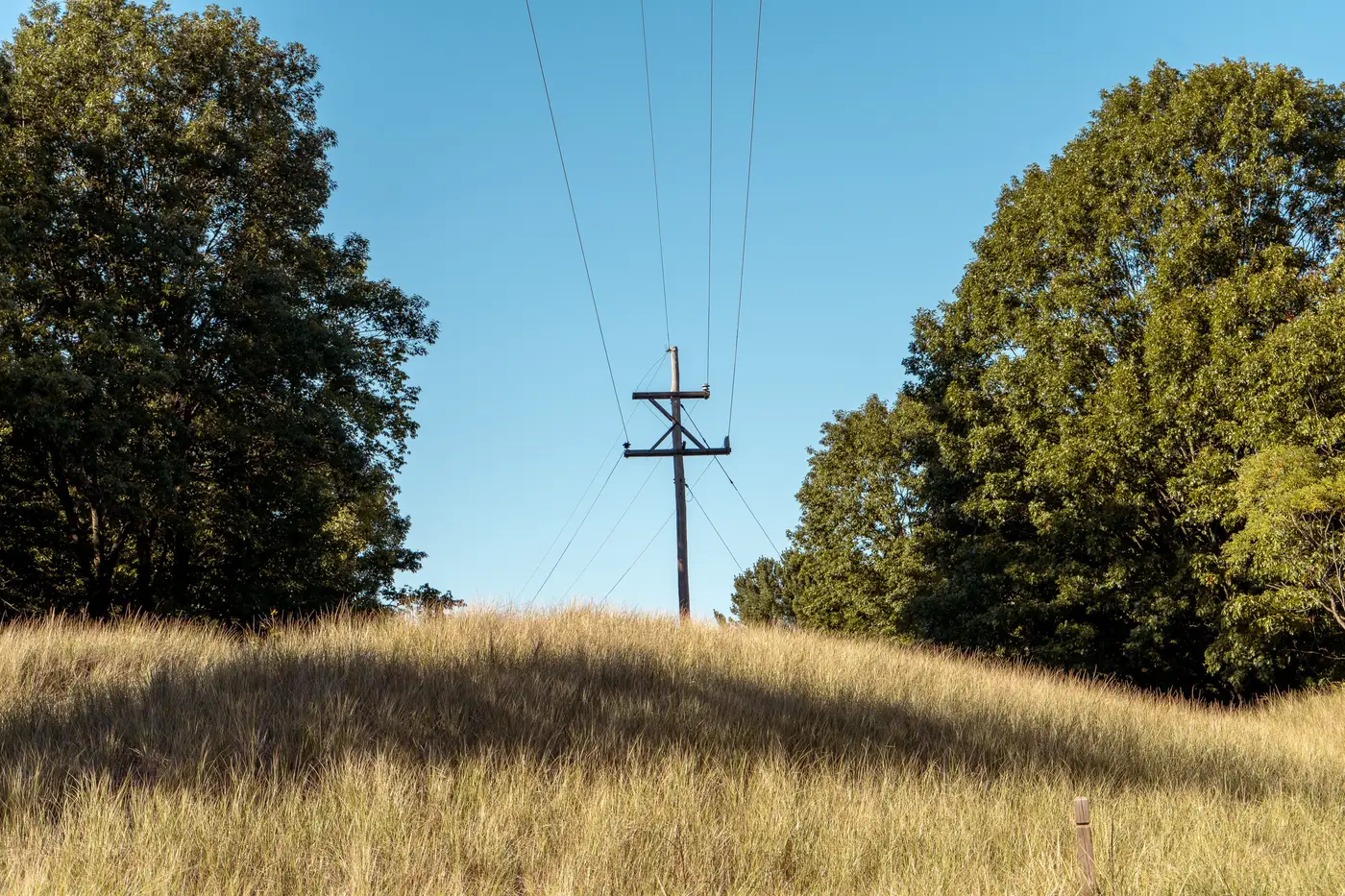
Ask two linemen what "encroachment" means and you'll get two different pictures in their heads. One's thinking about the oak limb hanging over the conductor that's going to come down in the next ice storm. The other's thinking about the brush crowding the pole from the side, slowly closing the gap crews need to climb and work safely. Both get logged as encroachment on a vegetation report. Only one of them is a fall-in risk to the line itself.
That difference matters more than it sounds like when you're building a trim worklist from a stack of patrol notes or a circuit-wide survey. Overhang and side growth fail differently, get caught by different detection methods, and often need different crew skills to clear. Lumping them into one "vegetation issue" column is how a span with six inches of overhang clearance ends up behind a span with ten feet of brush that was never going anywhere near the wire.
Overhang: the fall-in risk from above
Overhang is canopy that sits above or directly over the conductor height, whether or not it's touching yet. A healthy tree 40 feet off the right-of-way edge can still have limbs stretching into the airspace above the line. Vertical reach relative to conductor height is the number that counts here, not how close the trunk sits to the pole. A dead limb, a storm-weakened fork, a tree that's grown faster than the last trim cycle accounted for: any of these can fall straight onto the line regardless of how far back the trunk sits.
This is the category that drives outage causes after wind and ice events. It's also the hardest to catch from the ground, because a crew walking the right-of-way sees the trunk location, not the canopy's actual extent over the wire. Canopy height models built from VHR imagery pick this up directly: segment the tree crown, measure its height against known conductor height for that span, and flag anything where the vertical gap has closed below your clearance threshold.
Side growth: the lateral clearance problem
Side growth is different. It's brush, saplings, and lower branches encroaching from the sides of the corridor toward the conductor's horizontal position, not from above it. This is the stuff that grows into minimum approach distance over a season or two if a right-of-way gets skipped in a cycle. It's rarely the cause of a fall-in event, but it's a real risk for crews working the line, for fire ignition in dry corridors, and for conductor galloping clearance in high-wind spans.
Side growth tends to be easier to catch with routine patrol because it's visible from the access road. It's also the category most cyclical trim programs were built around. The problem is that a blanket trim cycle treats every mile of right-of-way as equally likely to have a side growth problem, which wastes crew hours on corridors where nothing's grown back yet and misses the handful of spans where it has.
Why the distinction changes the worklist
A span scored high for overhang needs a different response than a span scored high for side growth, even if both show up as "encroachment" on the same report. Overhang risk usually means a bucket truck and a trim crew that can work canopy at height, sometimes with a removal if the tree's structurally compromised. Side growth is often a mower or a hand crew clearing brush at ground level, faster and cheaper per span. If your worklist doesn't separate the two, you can't route the right crew type to the right span, and you end up either over-dispatching bucket trucks for brush clearance or under-resourcing the spans that actually threaten the conductor from above.
This is the gap Powerline Vegetation Monitoring is built to close. It scores every span for canopy encroachment using segmented crown height measured against your conductor positions, so overhang risk shows up as its own ranked list, not buried inside a generic vegetation flag. The score is tied to your own span IDs, which means a crew lead can pull the list, see which spans need an aerial trim for overhang versus a ground clear for side growth, and send the right crew without re-walking the corridor first.
If your current trim list doesn't tell you which kind of encroachment you're looking at, it's worth finding out what one that does looks like.