What is a legacy easement, and why the width doesn't match today's clearance needs
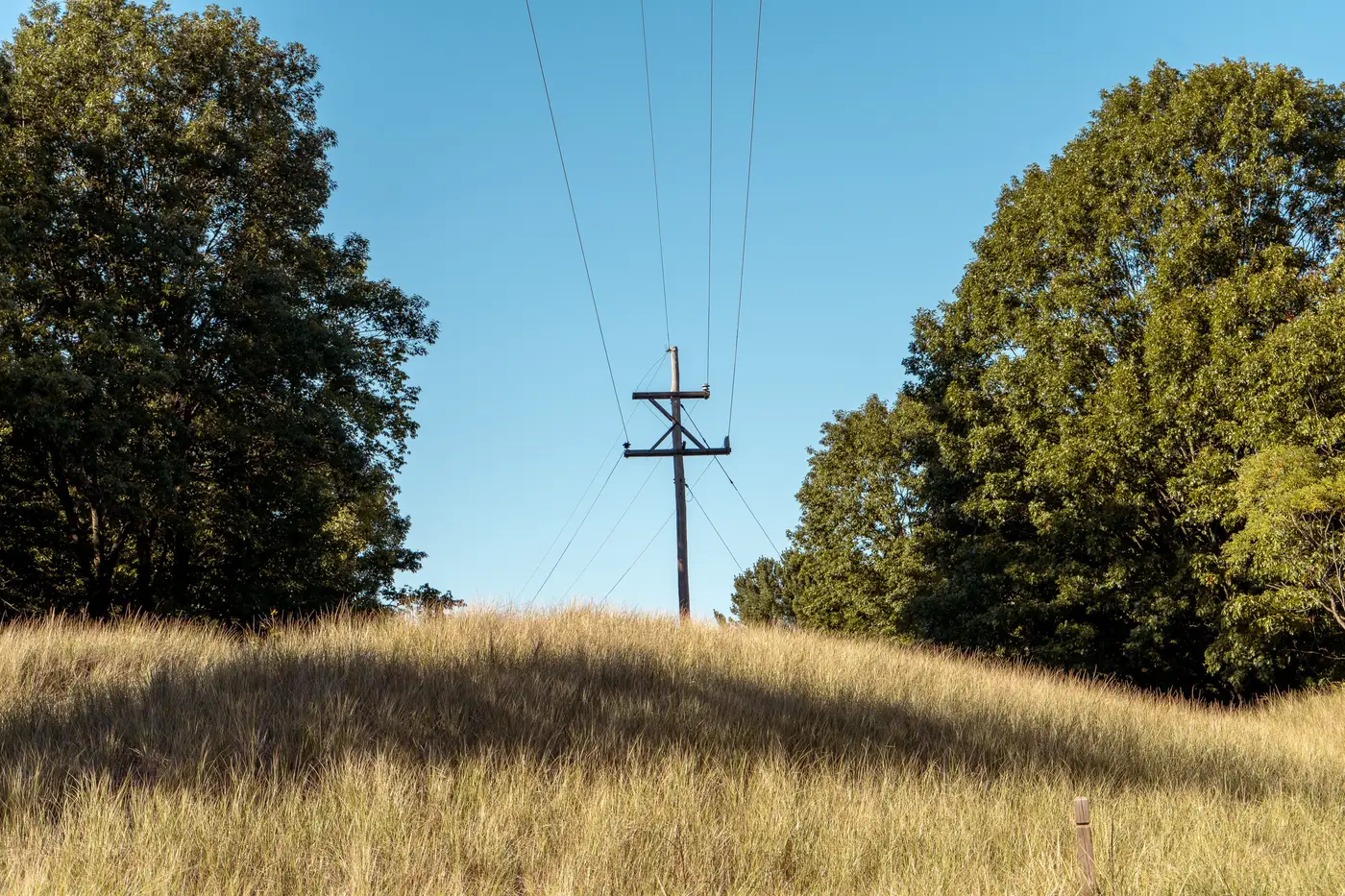
A legacy easement is the deeded right-of-way grant your utility (or its predecessor) recorded when the line went in, sometimes in the 1940s or 50s, sometimes later. It fixes a width in feet, tied to the centerline of the original conductor route, and it's the legal boundary you're allowed to clear without going back to the landowner. That width was set once. It has not moved since, even though almost everything else about the corridor has.
How old ROW grants got their width
Most easement widths were sized for the line that existed at the time, not for the one running through the corridor now. A 1950s distribution rebuild might sit on a 30-foot grant that made sense for the pole height and span length of that era. Reconductoring, voltage upgrades, and taller structures since then have all changed what needs to stay clear today, but nobody went back and renegotiated the paper.
Grants also vary wildly by original survey, by county recorder, and by whoever drafted the language for the parcel next door. Some specify a width from centerline, some specify total corridor width, and plenty just reference a strip "sufficient for construction, operation, and maintenance" without a number at all. That vagueness was fine when tree growth was slow and trim cycles were short. It's a liability when a circuit hasn't seen a crew in six years and the canopy on the edge of the grant has had that whole time to grow in.
Easement vs. clearance zone
This is the distinction that trips up a lot of worklist planning. The easement is a legal boundary: it tells you where you have the right to cut without a separate agreement. The clearance zone is an engineering boundary: it's the distance a given conductor, at a given voltage, under worst-case sag and sway, needs from vegetation to avoid fall-in or flashover. These two numbers are rarely the same, and on older ROW they're often not even close. A span can be fully compliant with its easement, every branch inside the deeded strip, while still carrying danger trees whose height puts the canopy well within strike distance of the conductor because the grant was never wide enough for the voltage class running through it today.
That gap is where most of the real risk sits. A crew working strictly to easement boundaries will clear what the paper allows and miss the tall growth just outside the line that can still reach the wire on a wind event. A crew working strictly to clearance distance will want to cut vegetation that technically sits on land the easement doesn't cover. That means a landowner conversation, a permission request, or a formal encroachment notice before the saw touches anything.
Encroachment on old grants, span by span
Because grant width and conductor clearance diverge unevenly across a circuit, a blanket cyclical trim treats every span the same when the risk isn't spread evenly. Some spans on a wide, well-maintained grant have plenty of margin. Others, especially on older corridors cut through parcels that were subdivided or replanted since the original survey, have canopy pressing right up against the clearance distance regardless of what the deed says. Treating all of them on the same calendar means crews spend hours on spans that didn't need attention this year while spans actually threatening fall-in wait for the next cycle.
Sorting that out by eye, from old plat maps and whatever trim history is on file, is slow and it's exactly the kind of thing that falls through the cracks when a circuit changes hands between contractors. Scoring encroachment from imagery, span by span, against your own span IDs turns that into a ranked list instead of a guessing game. Powerline Vegetation Monitoring builds that list by measuring canopy height and proximity to the conductor directly, independent of what any old grant document says the width should be, and hands it to your crews as the spans to hit first.
If your worklist still runs on trim cycles instead of actual encroachment risk, see how a ranked, span-level list replaces the blanket schedule.